Your cart is currently empty!
Shipping class: Economy
Дастаўка авіяпоштай, дзе гэта магчыма; звычайна без адсочваньня
-

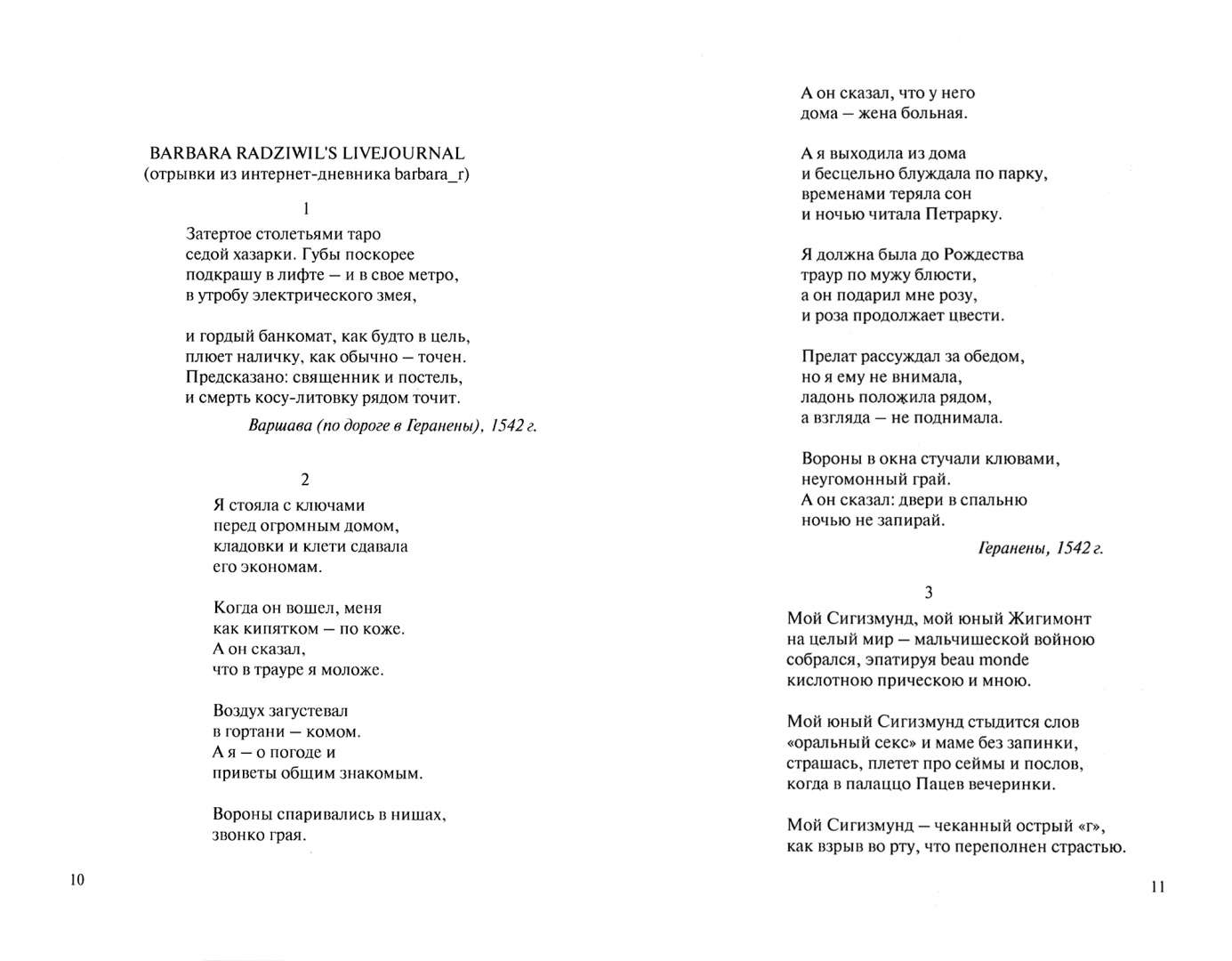
Motherfield: Poems & Belarusian Protest Diary / Julia Cimafiejeva
Julia Cimafiejeva was born in an area of rural Belarus that became a Chernobyl zone when she was a child. The book opens with a poet’s diary that records the course of violence unfolding in Belarus since the 2020 presidential election. It paints an intimate portrait of the poet’s struggle with fear, despair, and guilt as she goes to protests, escapes police, longs for readership, learns about the detention of family and friends, and ultimately chooses life in exile.
But can she really escape the contaminated farmlands of her youth and her impure Belarusian mother tongue? Can she really escape the radiation of her motherfield? This is the first collection of Julia Cimafiejeva’s poetry in English, prepared by a team of co-translators and poets Valzhyna Mort and Hanif Abdurraqib.
onglisted for the 2023 PEN Award for Poetry in Translation
Shortlisted for the 2022 Derek Walcott Prize for Poetry
“The language I wish to speak / isn’t contained in words,” writes Julia Cimafiejeva, while giving us these moving words of witness and testimony, compelling poems of kinship, of bravery and fear and reckoning: “we came back for a visit,” she writes, “only cemetery crosses / waved at us with rags / of their embroidered towels.” There is so much lyricism in this painful reckoning, the language itself uplifts even as it doubts itself in a time of great upheaval: “I approach the territory of a foreign language / as a melancholy spy / I must steal a secret / of these strange hills.” Poetry here doesn’t just survive despite translation between languages, but because of it. And for that, my special gratitude is to Cimafiejeva’s brilliant translators, Valzhyna Mort and Hanif Abdurraqib. The horrors of reality in today’s Belarus, the beatings and tortures of prisoners, the eerie presence of Chernobyl disaster in these pages, all true, all heart-breaking, and all also somehow carried through to us by beautiful, memorable, unrelenting words.” —Ilya Kaminsky, author of Dancing in Odessa and Deaf Republic
“Julia Cimafiejeva’s Motherfield is a minefield of memory. I close my eyes, recall the events that unfolded in my own country in 2020 and 2021. The similarities of our recent histories—the stun grenades, rubber bullets, beatings, and detentions—are striking. Still, there’s no mistaking Motherfield’s singularity, which is to say Cimafiejeva’s dexterity.” —Nicole Sealey, author of Ordinary Beast
“A dual-language publication, Motherfield reads like a testament to the innate multilingualism of Belarus. And after all, what Belarusians say matters just as much as what language they say it in. In Motherfield, Cimafiejeva has proved herself to be a bad student of fear. She wields her flexed, forceful verses like that mightiest of muscles — the tongue.” —Jennifer Wilson, The New York Times Book Review
“A devastatingly beautiful and essential read.” —Pierce Alquist, Book Riot
“Motherfield is a forceful diptych pairing the poet’s protest diary (spanning the period from Belarus’ 2020 presidential election to March 2021, after the poet has settled in Austria) with poems flowing from days full of fear and hope.” —Layla Benitez-James, Harriet Books (Poetry Foundation)
“Offering historical, political, and personal context to the poems that follow it, the diary is an activist’s account, but it is also a poet’s account; some of its moves and images linger and react with the poems’ more distilled elements…In the end the speaker keeps a ‘beaten hope’ that ‘builds its nest / On my roof and sings / In Belarusian.’ This poem, unlike others, is dated: August 5, 2020, just before the election, before the crackdown, before the president remained, again, in power. The beginning is at the end, enacting the cyclical nature of the “beaten hope” the poem names…[I]f Motherfield’s final poem relies on the protest diary for context, the poems that precede it—their images of wordlessness, thwarted regeneration, and ecological catastrophe—give the book its depth, and announce Julia Cimafiejeva as a poet that English language readers will want to follow in the future.” —Jessica Johnson, Rain Taxi
“This book is a sword; its poems cut through so much clutter to the white-hot wire of social, political, and personal injustice—warranted, searingly expressed, and yet somehow also nondogmatic, intuitively right, and artistically original. These poems speak volumes; to an astute reader, they can also serve as a warning. It is a voice that deserves and rewards our attention—hopefully you can give it yours.” —Andrew Singer, World Literature Today
-

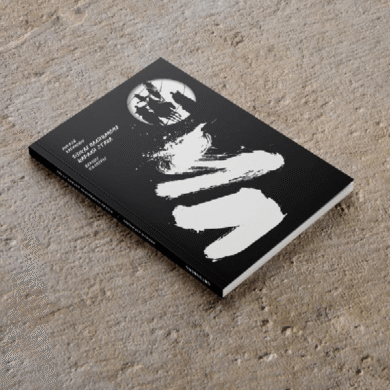
Muränenröhrling (Рыбагрыб) / Віктар Жыбуль
Віктар Жыбуль (*1978) — паэт, літаратуразнавец, драматург і перформер з Беларусі. Удзельнік творчага руху «Бум-Бам-Літ», шматлікіх літаратурных і тэатральных праектаў. За кнігу вершаў «Аранжавы» (hochroth Minsk, 2024) быў уганараваны літаратурнай прэміяй «Гліняны Вялес». «Muränenröhrling» — яго першая кніга вершаў, апублікаваная на нямецкай мове.
Томас Вайлер (*1978) перакладае з беларускай, рускай і польскай моваў, пераважна прозу і дзіцячую літаратуру, а таксама паэзію — напрыклад, Алеся Разанава, Веры Бурлак, Юлі Цімафеевай і Алега Грыгор’ева. У 2024 годзе быў узнагароджаны прэміяй Паўля Цэлана. Займаў пасаду запрошанага прафесара ў праграме па паэтыцы перакладу імя Аўгуста Вільгельма фон Шлегеля. У 2025 годзе атрымаў прэмію Ляйпцыгскага кніжнага кірмашу ў катэгорыі «Пераклад».
-

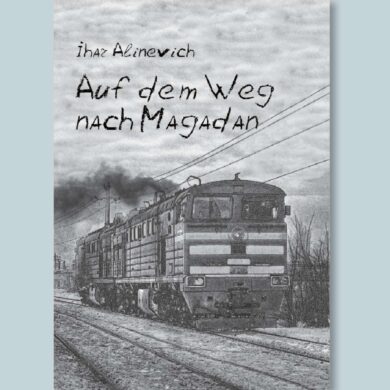
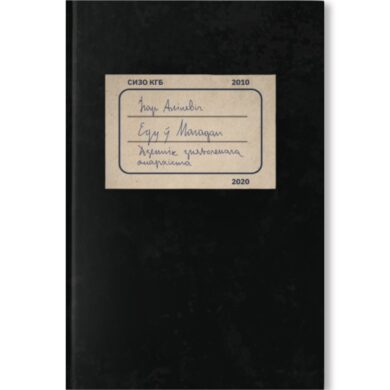
On the Way to Magadan / Ihar Alinevich
Belarusian anarchist Ihar Alinevich was detained on November 28, 2010 in Moscow by security service agents and illegally transferred to Minsk KGB prison. He was accused of a series of direct actions and in 6 months sentenced to 8 years of jail together with his comrades Mikalai Dziadok and Aliaksandr Frantskevich.
The book depicts what is happening in modern Belarus. It’s about the choice one has to make between life and death, freedom and incarceration, conscience and betrayal. Everything that happened to Ihar, happened in real life in the 21st century, in a ‘civilized’ European country, before and after the presidential elections in 2010. ‘On the Way to Magadan’ is uncensored Belarus.
-

Ribwort / Hanna Komar
3TimesRebel, 2023,
ISBN 9781739128784, 181 с., мяккая вокладкаУрывак з прэзентацыі, вершы па-беларуску Ганна чытае а 3:30 і 13:25.
Ribwort is a space to sit down with your pain and listen. You may think it’s not helpful, like a leaf of ribwort on a bleeding wound. The pain will probably be growing more and more acute, but if you face it, if you hold space for it. Eventually, it will shrink to the size of a scratch which a ribwort leaf can help heal. When we have healed, we become leaves of ribwort for others, so we can sit down with their pain and listen. Listen with compassion and without fear, without getting defensive or running away. This is what keeps us going.
In the summer of 2021, Hanna Komar brought the script for this book to a publisher in Belarus. He told her his business would be shut down for her protest poems. He couldn’t publish them. Since then, almost all independent publishers of Belarusian books in the Belarusian language have had their business suspended or liquidated. Books have been labelled “extremist” and people have been imprisoned for selling or owning them, while writers have been persecuted for writing them.
This is just a tiny tip of the iceberg of the repressions which unfolded in Belarus when the people stood up against the falsified election results on 9 August 2020 and the violence which followed afterwards. Every day, still, dozens of people are arrested in Belarus on political grounds. Some call that summer the awakening of Belarusians; others call it the birth of a new, free Belarus. No matter what it’s called, these years have felt for the nation, and the author of this poems, like unlearning what was already learnt helplessness. Yet these have also been maturing years through courage, solidarity, hope, pain, suffering, and disillusionment. A lot of wounds have opened.
This book doesn’t start with the protest poems of 2020. It consists of sections which tell about the poet’s relationship with her parents and with herself, about her romantic relationships, about her relationship with her homeland, and the poetry of civil resistance. Each of them is administering a leaf of ribwort to help the wounds heal.
Translated from Belarusian by the author, with the English version edited by the American poet Mary Kollar.
Hanna Komar is a poet, translator, writer. She has published four poetry collections, “Страх вышыні” [Fear of Heights], a collection of docu-poetry “Мы вернемся” [We’ll Return] and “Вызвалі або бяжы” [Set Me Free or Run] in Belarusian, as well as a bilingual collection Recycled. Her work has been translated into Polish, Ukrainian, Swedish, Norwegian, German, Czech, Lithuanian, Slovenian and Russian. She translates her work into English. Hanna is a member of PEN and Freedom of Speech 2020 Prize laureate from the Norwegian Authors’ Union. She holds an MA in Creative Writing from the University of Westminster. She is interested in using poetry to support Belarusian women to share experiences of gender based violence and patriarchy.‘In the quiet of my body
a forgotten dream
tosses about
the apple I’ve eaten
acidifies,
blood gushes out with asters,
muscles wheeze, the voice
of the ligaments breaks,
and lamenting sweat
pierces my pores.
Only tears, quieter
than quiet itself,
can hear my deafness
to the polyphony of fate …’‘ Hanna Komar’s poems display a refined ear for sound and sense both in Belarusian and translated by her into English. Her poems move seamlessly from the personal to the political, speaking with the urgency of a life experienced with compassion, dignity and resolve.’
Mary Kollar, poet and educator, USA -

The Colours of the Parallel World / Mikola Dziadok
In 2017 The Colours of the Parallel World received the Francišak Aliachnovič Award which is given by PEN Belarus for the best work in any genre in Belarusian or Russian that has been written in prison. In 2010 Mikola and several other anarchists were arrested for an attack on the Russian Embassy in Minsk. Ihar Alinevich, another activist of the movement, also arrested back in 2010, in his book On the Way to Magadan tells in a lot of detail what actually happened there and their motivation behind it. Ihar was the first to have received the Francišak Aliachnovič Award in 2013. At the moment, he is again imprisoned by the illegitimate government in Belarus.
In the introduction to The Colours of the Parallel World Mikola wrote:
…the authorities have been and are afraid of publicity around anything that is going on in prison dungeons, intentionally making them as secretive as possible. This means that publicity can do them reputational and moral harm. And if we have an opportunity to inflict such harm, we must use it… To tell the truth and expose misdoings is an imperative, a moral duty of every person. Second of all, it’s important to speak about what we’ve seen and felt for documentation, too.
Mikola is talking about the prison system from inside, about its brutality and violations of human rights. Tens of thousands of Belarusians have experienced it first-hand since August 2020, and I wonder, if we had read this book earlier, would it have changed us? Would we have stopped all this horror earlier? Or would we, conversely, have been too afraid of being grind by the system to even try? In either way, things haven’t improved by becoming much worse and Mikola’s book must be for now the most detailed description of the experience of a political prisoner in Belarus that we have access to in the English language.
(Hanna Komar, Poet)
-

The Zekameron / Maxim Znak
Winner of English PEN Award 2023. Shortlisted for the Republic of Consciousness Prize 2024.
‘How did these stories get into your hands? They flew, as if painted by Marc Chagall, through prison walls, borders, and languages.’ – Valzhyna Mort
‘It’s a terse account of painful experience, prison, bewilderment; hugely atmospheric and extremely funny – full of dry wit and small biting observations.’ – Anna Vaught100 stories written from prison in Belarus with ‘echoes of early Chekhov, Zoshchenko and Samuel Beckett’ (Michael Pursglove). Despite its bleak context, this is a fundamentally optimistic book, engaging comically, yet honestly, with what it means to be human. Translated from the Russian by Jim and Ella Dingley. With an introduction by ‘risen star of the international poetry world’ Valzhyna Mort.
Review
Maxim Znak’s message is that wry humour and humanity trump the cruel absurdities of the regime […] These stories, one hundred of them, none longer than three pages, have echoes of early Chekhov, Zoshchenko and Samuel Beckett and, ultimately, of Giovanni Boccaccio and Vernon Kress, who used the punning title for his 1991 novel of the Gulag.
– Michael PursgloveThe fact that this book exists at all should be a miracle. Simply because the stories were smuggled out … The true sensation, however, is the mental achievement the prisoner Maxim Znak was capable of: that in his situation, which could really be called hopeless, he still possesses the internal freedom to create literature.
– Cornelia Geissler, Berliner Zeitung[Znak] uses the weapons that dictators like Lukashenko detest most: humour, wit, publicity.
– Jens Uthoff, taz.die tageszeitungIt’s a terse account of painful experience, prison, bewilderment; hugely atmospheric and extremely funny – full of dry wit and small biting observations.
– Anna VaughtAbout the Author
Born in Minsk in 1981, Maxim Znak is an international lawyer from Belarus. After the presidential election of August 2020, he gathered hard evidence of the many violations of the electoral process and sought to take legal action by ensuring that the election results were reviewed by an independent body. Maxim Znak was arrested on 9 September 2020 and held in Remand Prison no. 1 in Minsk until 26 December 2021. This prison has the shocking reputation of being the only one in Europe where the death penalty is still being carried out. It was here that Znak wrote his stories, which later found themselves outside the prison walls.
Once outside, the stories were sent directly to Jim Dingley who previously translated two books from Belarus for Scotland Street Press. Dingley immediately sent the manuscript to Scotland Street Press. Its arrival was a huge consideration: would its publication endanger Znak’s life, or agitate successfully for his release? By September 2021 this brilliant lawyer was already re-sentenced to ten years in a penal colony in the North of Belarus. His wife and sister urged to go ahead with publication.
Valzhyna Mort was born in the same city and same year as Znak. She is a poet who writes in English and Belarusian. Her most recent volume of poetry, Music for the Dead and Resurrected, was published to great critical acclaim in 2020. She is the recipient of many international literary awards. She is currently Associate Professor in the Department of Literatures in English, Cornell University, Ithaca NY. -

Two Souls / Maksim Haretski
As Belarus grapples with the aftershocks of the Socialist Revolution, Ignat Abdziralovich, an officer, finds himself at the heart of personal and societal turmoil. While Ignat searches for love, he uncovers an unexpected family secret that pushes him to rethink who he is, confront the stark realities of class antagonism and pick a side.
Two Souls delves into Ignat’s philosophical introspections, offering a profound commentary on the human search for identity amid the conflict between personal ambitions and collective duties. Through Ignat’s eyes, readers experience the complexities and contradictions of a society on the brink of significant change.
Two Souls is a work of deep exploration created by Belarus’ first existentialist writer. Maksim Haretski’s masterful storytelling weaves a tale rich in historical and philosophical depth, vividly capturing the atmosphere of the early twentieth century and communicating the tension and uncertainty that pervaded Belarus during this transformative era.First published in 1919, Two Souls vividly portrays class struggles and boldly critiques Bolshevism, which led to its suppression for many years. It provides a critical lens through which to view the era’s political and social dynamics.
The present translation was undertaken with meticulous effort to retain the novel’s original flow and linguistic style. Every effort was made to stay as true to the original as possible, ensuring that the nuances and depth of Maksim Haretski’s work are preserved for English-speaking readers. -

VOLUMEN.3 : вершы / Міхал Бараноўскі
Гэта трэці паэтычны зборнік Міхала Бараноўскага. Вершы, прадстаўленыя ў кнізе “Volumen.3”, былі напісаны ў перыяд з восені 2020 па вясну 2024 года і часткова друкаваліся ў перыёдыцы: “Маладосць”, “Полымя”, “ЛіМ”.
Кніга складаецца з чатырох раздзелаў, у якіх аўтар шукае аптымальныя для сябе формы выказвання — ад малой паэмы, да афарыстычных «пункціраў». Міхал Бараноўскі працягвае развіваць уласную эстэтыку і шукаць сваё месца. Дзесьці на памежжы думкі і эмоцыі.
Аўтар выказвае шчырую падзяку Дар’і Бялькевіч, Юліі Мацук, Ігару Кулікову і Ірыне Мышкавец за рэдактарскія парады і выпраўленыя памылкі. Частку памылак аўтар пакідае на сваё сумленне.ЗМЕСТ
РАЗДЗЕЛ 1. ВЕЖА З ВАЎЧЫНЫХ КОСТАК
у вежы з ваўчыных костак
рэвальверную кулю
чорны бясспрэчна чорны?
за гарызонтам падзеяў
тое што мы жадаем пачуць
о цмокаборца ад шчырага сэрца вітаю
помнік гатовы ўскінуць рукі ў неба
сонца вышэе
віра віра
галаледдзе
адчуй як дзіцёнак руку сціскаеРАЗДЗЕЛ 2. ГОД ЗАМЫКАННЯ ЗЯМЛІ
з учора якога болей няма
сёмы паверх над узроўнем гора
пальцы спляліся змеямі
жыву ў картачным дамку
за мінулыя содні без перамен
словам навобмацак рухаюся па радку
пчолы якія збіраюць няправільны мёд
вецер свабоды зрывае капелюхі часам разам з галовамі
пошук гармоніі
разбіваю люстэрка
доктар прапішыце мне лекі
каго ратуем маці альбо дзіця
з вачыма блакітнымі прыходзіць на свет
лепш нарадзіцца нямым
маленькі прынц раскажы мне як трэба
трымайцеся правага бокуРАЗДЗЕЛ 3. ЗОНА РЫЗЫКОЎНАГА ЗЕМЛЯРОБСТВА
не варта здзіўляцца
не кранаю балючых тэм
скрозь цемру і час
непрамоўленых словаў каўтун нашу
таго сябе
аўтаматызаваная рэчаіснасць
магнітызуе
мятлікі-німфаліды
ці магчыма ўзмахам крыла
новая царква
скрыпіць на вежы
зіма піша мнагаслойна пасля кожнага снегападу свой тэкст
плюсы і мінусы
дождж дождж дождж дождж дождж
пасля залевы
у люстры вады
зарыфмавала
словам відушчым
хто тут гукаю
пакуль не баліць
глядзіце нямко
затачыў аловак
вырашыў мераць сябе самай вялікай меркай
з-за хмары выкацілася
самыя бескампрамісныя крытыкі класікаў
стаю на месцы
зорная хвароба
жыццё паліндром
прыйшоў на працу
свет такі крохкі
вецер халодны
яшчэ зялёную
спаміж новага
расці вялікі
каму біты шлях
смачна есці
волату ледзь сілы хапіла
дзядоў начапляў
далі жыццё навырост
кірлі з качкамі